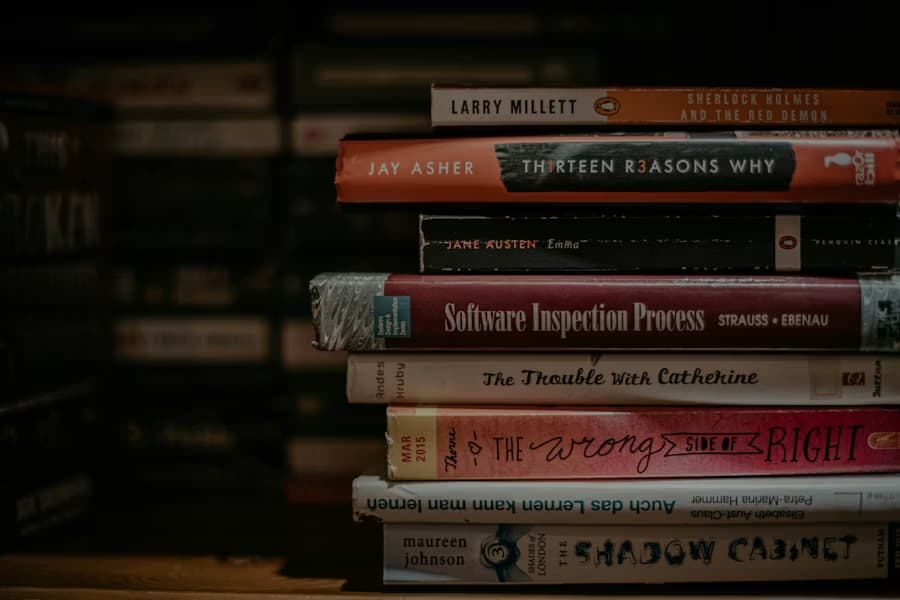
Literature functions as a vast mirror reflecting the human condition through various lenses known as genres. These categories are not merely filing systems for librarians but essential frameworks that help readers navigate the infinite sea of stories. A genre provides a set of expectations, a familiar rhythm, and a specific emotional palette that allows an author to communicate more effectively with their audience. While modern writers often delight in blurring the lines between these categories, the foundational structures of drama, poetry, and prose remains the bedrock of storytelling. Understanding these genres requires looking past simple plot points and examining the underlying philosophy and narrative architecture that defines each one.
The Foundations of Epic and Realist Fiction
At the heart of prose lies the novel, a relatively young form that has become the dominant medium for modern storytelling. Within this space, realism stands as perhaps the most influential subgenre. Realist fiction seeks to depict life as it is, without the intervention of the supernatural or the exaggerated heroics of ancient myths. It focuses on the psychological depth of characters and the intricate social structures they inhabit. When a reader opens a work of realism, they are looking for a reflection of their own world, rendered with enough honesty to feel universal.
Conversely, the epic and the high fantasy genre take the opposite approach. These stories lean into the “hero’s journey,” transporting the reader to worlds where the moral stakes are externalized through magic, war, and destiny. The characteristics of these genres often include vast world-building, a struggle between absolute good and evil, and a sense of historical weight. While realism looks inward at the human soul, the epic looks outward at the grand tapestry of civilization and the mythic forces that shape it.
The Evolution of Mystery and Suspense
Mystery fiction is built upon a fundamental contract between the author and the reader: a puzzle has been set, and by the final page, it must be solved. This genre is defined by its pacing and the strategic release of information. The classic “whodunit” relies on the brilliance of a central detective figure, while the modern thriller focuses more on the immediate physical danger and psychological tension faced by the protagonist. The key characteristic here is the “hook”—an inciting incident that disrupts the status quo and forces the characters to navigate a labyrinth of clues and red herrings.
In the realm of suspense, the focus shifts from “who did it” to “how will they survive.” This genre often overlaps with horror, where the primary goal is to evoke a visceral emotional response. Whether the threat is a literal monster or a metaphorical one, the hallmark of these genres is the mastery of atmosphere. Writers use sensory details and rhythmic prose to build a sense of dread, proving that in literature, what is left to the imagination is often more powerful than what is explicitly described.
Poetry and the Compression of Emotion
Poetry is perhaps the most misunderstood of all literary genres, often viewed as an abstract or difficult form. In reality, poetry is the most condensed version of storytelling. It prioritizes the sound of language, the rhythm of syllables, and the power of the metaphor over a linear plot. Whether it is the rigid structure of a sonnet or the fluid openness of free verse, the primary characteristic of poetry is its economic use of words. It aims to capture a single moment, a fleeting feeling, or a complex truth in a way that prose cannot. Poetry demands that the reader slow down, treating every line as a deliberate architectural choice.
Drama and the Power of Dialogue
Unlike the novel, which is intended for a private interaction between a book and a reader, drama is written to be realized in a public space. The key characteristic of the dramatic genre is its reliance on dialogue and action to reveal character and advance the plot. There is no narrator to explain the internal thoughts of the protagonist; everything must be externalized. This creates a unique form of tension, as the audience becomes a witness to the unfolding conflict. From the tragedies of Sophocles to the experimental plays of the 21st century, drama remains the most immediate and confrontational of literary genres.
| Genre | Primary Goal | Key Structural Element |
| Romance | Exploration of human connection | The “Happily Ever After” or emotional resolution |
| Science Fiction | Speculation on technology/future | The “Novum” (a plausible scientific innovation) |
| Historical Fiction | Reconstructing the past | Accuracy of setting and social mores |
| Gothic | Evoking gloom and mystery | Atmospheric settings like ruins or castles |
Science Fiction and the Literature of Ideas
Science fiction is often unfairly dismissed as mere escapism, but at its best, it is the most philosophical of genres. It operates on the “What If?” principle. By changing one variable in our reality—such as the invention of interstellar travel or the creation of artificial consciousness—the author can explore the social and ethical consequences in a controlled environment. The defining characteristic of sci-fi is “cognitive estrangement,” a process where the reader recognizes the world as different from their own, yet governed by logical, rational rules. It is a genre that looks forward, using the future as a laboratory to examine the problems of the present.
- Non-Fiction: The genre of truth, encompassing biography, essays, and journalism, where the characteristic is the commitment to factual accuracy.
- Satire: A genre that uses irony and humor to critique social follies, often blending with other genres to mask its subversive intent.
- Magical Realism: A unique hybrid that inserts fantastical elements into an otherwise mundane, realistic setting without explanation.
Literature is a living organism, and its genres are constantly evolving to meet the needs of new generations. As we move further into the digital age, we see the rise of “Cli-Fi” (climate fiction) and “Bizarro” fiction, proving that as long as humans have stories to tell, we will find new ways to categorize and share them. The beauty of literary genres lies not in their boundaries, but in the infinite ways they allow us to see the world from a different perspective.